Modulation & Pitch
Cognate Polymath Manual
Version v1.2.0 · 01/10/2026
Modulation & Pitch
Version v1.2.0 · 01/10/2026
| Category | Modulation & Pitch |
| Channels | Mono in / mono out |
| Version | 1.2.0 (01/10/2026) |
Polymath is a four-voice, low-latency pitch shifter and octaver built for bass. Four voices run in parallel with your dry signal — a fat sub octave, crystal-clear +1 and +2 octave voices, and a freely transposable Shift voice that travels anywhere from an octave down to two octaves up. Everything is polyphonic, including the sub, so chords and double-stops track cleanly with none of the glitching you'd get from an analogue octaver. Add the unique Attack control — which sweeps from slow ambient swells to transients that punch harder than your dry note — a single Tone tilt, and Timbre, which keeps the shifted voices sounding like your own instrument, and one block covers octaver, down-tuner, harmoniser and detuned-chorus duty.

Page 1 of 2

Page 2 of 2

Toggles the whole effect in and out. When bypassed, your dry signal passes through untouched.
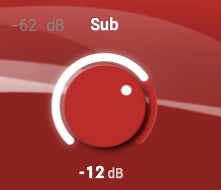
-40 = "Off"Sets the level of the sub-octave voice — a smooth, solid octave-down that adds weight and support beneath your dry bass, or stands alone as a synth-like voice. Unlike an analogue octaver it never glitches and it's fully polyphonic, so chords and double-stops hold together.
Turn it fully left to "Off" to mute the voice entirely.
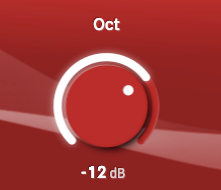
-40 = "Off"Sets the level of the octave-up voice — a bright, clean octave that turns your bass into a lead instrument or a guitar. Blend it in for bite and presence, or push it for a full register shift.
Turn it fully left to "Off" to mute the voice.
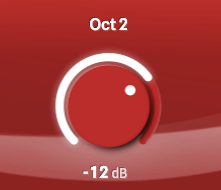
-40 = "Off"Sets the level of the two-octaves-up voice, for when you need to reach the very highest notes. On its own it's piercing; blended with the other voices it adds shimmer and air to the top of your sound.
Turn it fully left to "Off" to mute the voice.
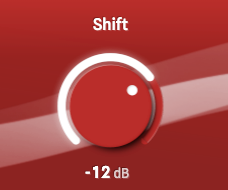
-40 = "Off"Sets the level of the freely-transposable Shift voice — the most versatile of the four. Its pitch is set by the Interval control, so this single voice can be a down-tuner, a detuned chorus, or a harmoniser depending on where you tune it.
Turn it fully left to "Off" to mute the voice.
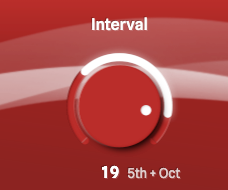
0 = "Detune"12 = "Detune"24 = "Detune"Sets the pitch of the Shift voice in semitones, relative to the note you play — anywhere from an octave down to two octaves up. This is what gives the Shift voice its many personalities:
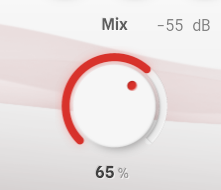
Blends all four pitch-shifted voices against your dry signal.
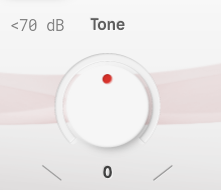
A tilt EQ applied to the pitch-shifted voices, leaving your dry signal alone. Turn left for a darker, warmer voice; turn right for a brighter, crisper, glassier sound. Centre is flat.
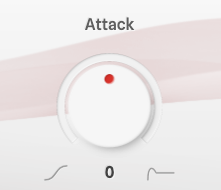
Shapes the attack of the pitch-shifted voices — a control unique to Polymath. Centre leaves the natural attack intact.

Balances CPU usage against clarity and smoothness. Pick the mode that fits what you're playing:
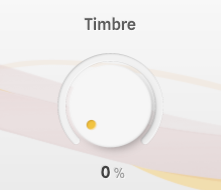
Keeps your instrument's own tone on the shifted voices. An ordinary pitch shifter moves everything up or down together, including the body resonances that make your bass sound like your bass, and that's where the classic organ- or synth-like colour of a shifted voice comes from. Timbre holds those resonances where they belong, so the Oct, Oct 2 and Shift voices sound like your own instrument playing higher or lower.
The Sub voice isn't affected: it keeps its own fat, distinct character.